
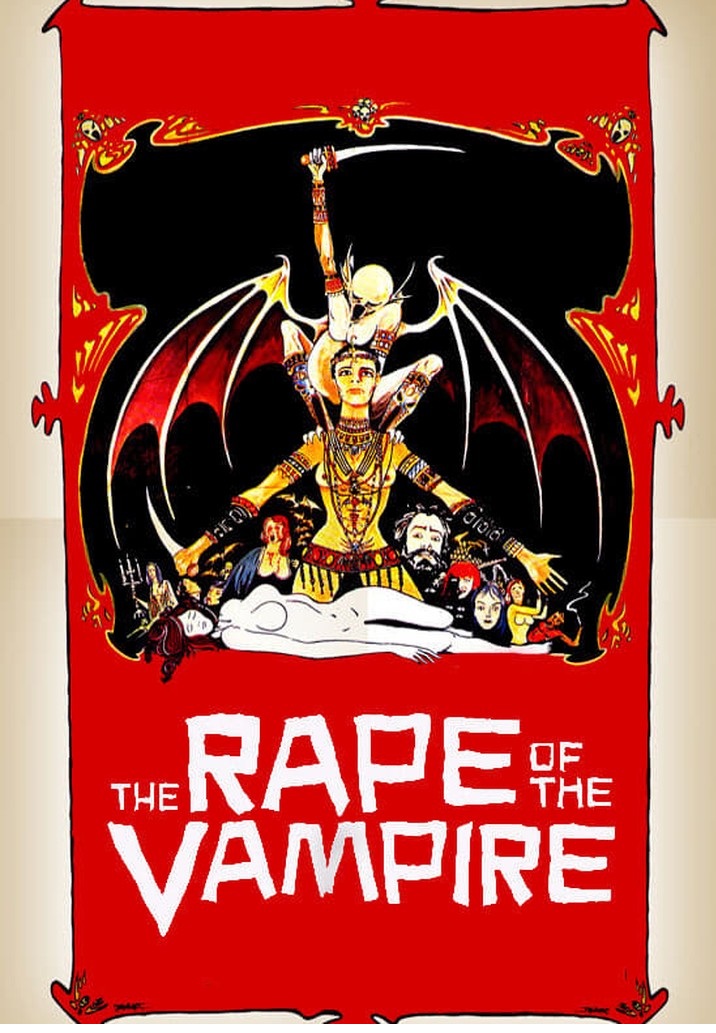
Jean Rollin’s THE RAPE OF THE VAMPIRE (aka QUEEN OF THE VAMPIRES, LE VIOL DU VAMPIRE, VAMPIRE WOMEN, 1968)
Directed by Jean Rollin.
Written by Jean Rollin & Alain Yves Beaujour.
Starring Solange Pradel, Bernard Letrou, Ariane Sapriel.
Check out the trailer here!!
This is the first of three reviews I’ll be doing of Jean Rollin’s films. THE RAPE OF THE VAMPIRE is undeniably French in many ways. There are a lot of somber silences with extended pauses accompanied by staring off into the distance. There’s a whole lot of French girl boobage, which is never a bad thing. And occasionally, there’s even a vampire or two. But what makes this film stand out is that it definitely veers from most other vampire stories of its time which were busy reimagining the tales of Dracula and Carmilla. This one involves the never-ending battle between scientific facts and folkloric fantasy.
The film opens with a trio of investigators checking out an old castle where four insane women live. Upon arrival, they find that the women believe themselves to be vampires, worshipping a vampire statue. Some of them are afraid of the sunlight, while others aren’t. Because of this inconsistent variation between the symptoms of the women, the lead investigator deduces that this is merely a psychological disorder and not actual vampirism and sets out to cure them through radical shock therapy by tossing them in the sunlight and forcing them to leave their homes.
The film is separated into two acts, the first ending with the investigators’ theories shattered when one is killed and the other two are turned into vampires themselves. The basic symptoms of vampirism don’t seem to apply here, but what is prevalent is the thirst for blood. Soon a vampire queen arrives, reminiscent of Grace Jones’ turn of the tooth in VAMP, with a cadre of followers who traipse around a beach tormenting young girls and eventually turning them into vampires as well to join their beatnik ragtag group. As the two investigators search for the cure for vampirism, the queen and her minions set up a stage play with unconventional jazz musicians scat-scat-scooting in the background. The film ends with a cure being found, but not with the intended results.
I was able to admire the ingenuity of the story Rollins brings to this tale of the vampire. Too many vampire tales rely on Stoker or some age-old story such as the Bathory or Carmilla tale as framework. This one plays on the belief of being a vampire and how science would view it. First the disease is shunned and said to be a psychological disorder, until the investigators themselves come down with the ailment. Then the disease is treated as just that and experiments are performed to cure it in a medical manner. There are no stakes or garlic to be seen here—simply hard science, which is kind of cool. I also liked the change from non-believer to believer that happens here. Both are interesting concepts far above the normal vampiric lore being done at the time cinematically.
At the same time, this film is a tough pill to swallow with all of its French frilly speak and pretentious mood. The drama is amped to the nth degree, and many scenes seem more like clips from a surrealist film than an actual narrative. I have to admit, though understanding the plot, I found my attention waning as people droned on and on and I watched long scenes of beach landscapes and men in leotards dancing around women in see-through veils showing their nipples. Sure, French naked girls are titillating, but when served with an abundance of pretention one grows tired pretty quickly.
Though I found the content to be grating, I have to admit there are some great original ideas here, some of which are being explored today in more progressive vamp stories. I can admire this film for the creativity of plot, but you have to sift through all of the beatnik mumbo-jumbo to get it. THE RAPE OF THE VAMPIRE is not my favorite vampire movie, but it does show a lot of imagination.

