
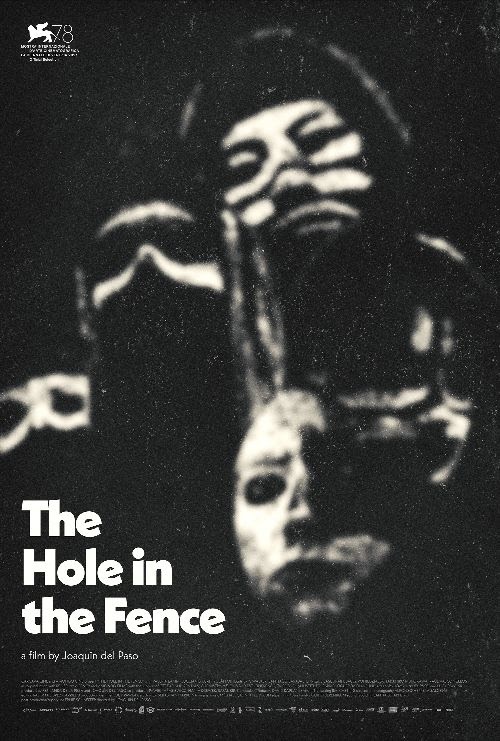
New On Demand/digital download from Altered Innocence!
THE HOLE IN THE FENCE (aka EL HOYO EN LA CERCA, 2021)
Directed by Joaquin del Paso.
Written by Joaquin del Paso, Lucy Pawlak.
Starring Valeria Lamm Williams, Yubah Ortega, Luciano Kurti, Eric Walker, Santiago Barajas, Enrique Lascurain, Jacek Poniedzialek, Raul Vasconcelos
A religious summer camp for privileged youth begins with excited boys looking forward to fun and adventure. The staff works hard to teach the boys discipline, honor, and pride, encouraging them to work together through performances, daily prayer, and games. But boys will be boys and while the main goal of the camp is to help out the local villages, its survival of the fittest where those who are different are secluded and tormented right under the noses of the pious counselors. Tensions escalate between different fractions of the camp and rise to a fever pitch during a game of capture the flag taken all too seriously.
While it is not as controversial, THE HOLE IN THE FENCE is as much a horror film as Larry Clark’s 1995 film KIDS. Now it’s not at taboo breaking as KIDS was, but it does focus on the very disturbing interactions between kids—interactions that are very different than what are usually depicted in media today. The horror comes from the cruel way the kids treat one another and the dangers they face even at a seemingly harmless place as a religious summer camp. While things do get very LORD OF THE FLIES-like towards the end, the adult counselors are present and provide their own set of threats towards these impressionable children. The climax where the kids go wild and start attacking one another serves as the result of what the counselors have taught them in their lessons. This behavior is encouraged by those they look up to, which seems to be the main point of THE HOLE IN THE FENCE, that corruption, prejudice, homophobia, abuse, violence and other terrible traits are a result of the leaders of the social structure these kids find themselves in.
The camp is for privileged children, but also seems to open their doors to those who aren’t as fortunate, this causes a wedge in the group as well. This is clearly shown by following one child, whose skin is darker than the others, who desperately tries to conform, but is singled out time and time again. And being singled out is the worst thing you can do at this camp as it leaves you vulnerable to gang violence from the rest of the kids as well as making them prime targets for some of the predators that make up the adults at the camp. Through some very subtle dialog, we find out that all kinds of abuse and wrongdoing has occurred in the past, but its seen as a rite of passage for most involved as well as a case of survival of the fittest for the weak. Thematically, there’s a lot going on with THE HOLE IN THE FENCE, the camp as an allegory for what is wrong with the world outside of it. When one of the rich kids is hurt, his parents take a helicopter in and whisk him away, but the parents who have gone through the camp before, seem to look back on it with fond memories, as if the horrifying lessons learned at the camp has helped shape the future of so many people in the upper crust and suggesting how corrupt that class level can be. These teachings have been going on for generations, and as the kids settle back into their own lives towards the end, it seems the camp will live on to serve future generations with the same warped views. That is where the true horror of THE HOLE IN THE FENCE lays.
Don’t go into this Mexican film thinking it’s going to be something like THEM or EDEN LAKE or any of the other evil kid movies that come to mind while you might watch the trailer. THE HOLE IN THE FENCE is a very dark drama shining a spotlight on institutional failures in what we teach our children. It focuses on very uncomfortable issues and is not for those easily triggered, but the film does a fantastic job of trying to teach the audience about what children are taught when the parents are not around and how that can shape them into true monsters under the wrong influence.
 MLMILLERWRITES / MLMillerFrights